



Bram E. Gieben speaks to writer, theorist and ecotherapist Rob Faure Walker for Revol Press and Strange Exiles. Author of 2024’s Love and The Market, on economics and the Enlightenment, and 2022’s The Emergence of Extremism, Rob returns this year with Radical Jung: Emancipatory Politics and the Search for Meaning in the Ruins of Late Capitalism for Revol Press.
Scroll to the bottom to view a video version, or subscribe to Strange Exiles on YouTube. Check out our first collaboration, featuring Gareth Stuart Farmer, here.
Recommendations from Rob Faure Walker
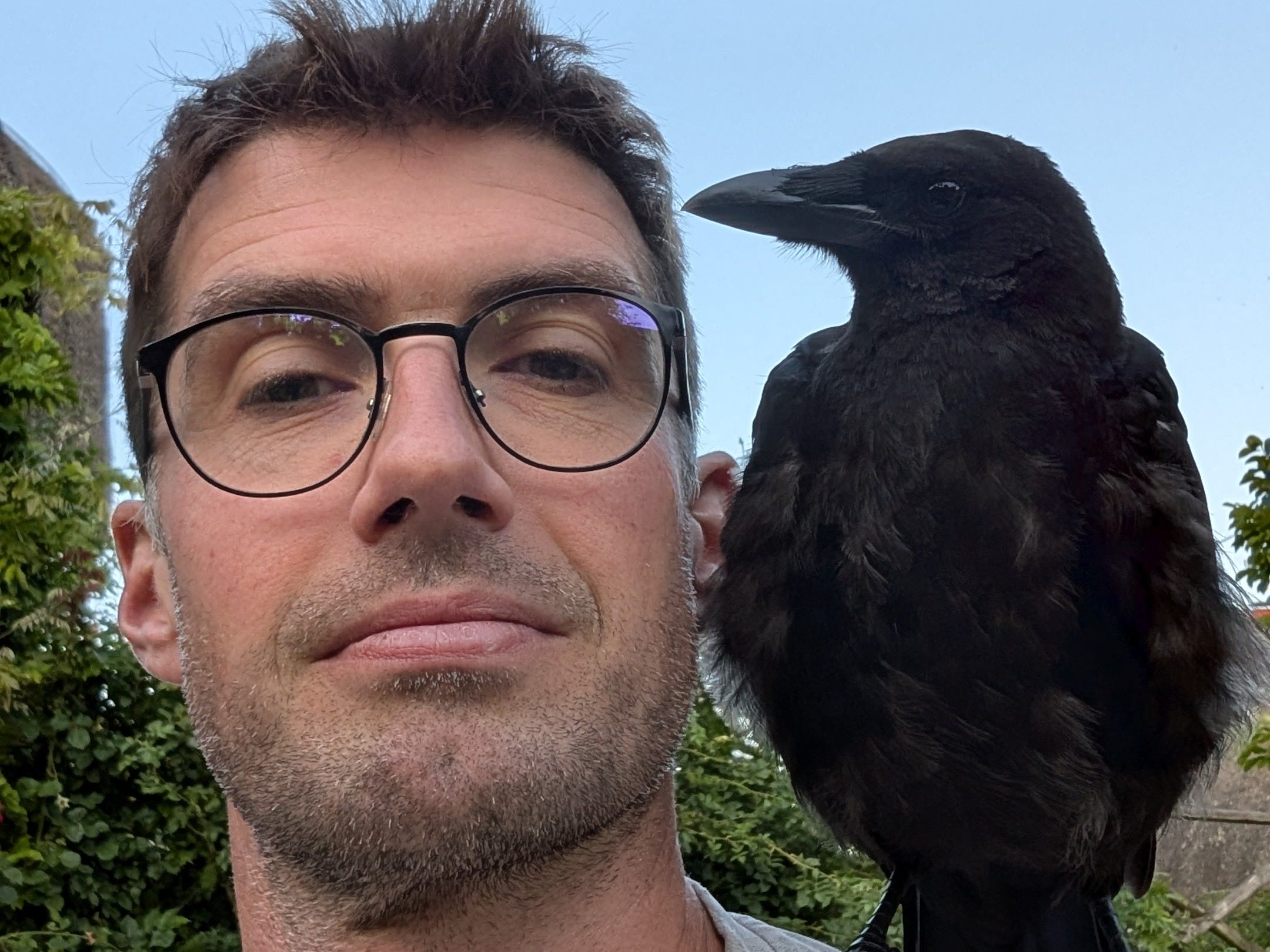
Speaking about his choice to move to the countryside, Rob mentions the release by Sadiq Khan of suppressed data on air quality at London schools in 2016. This was a major factor in Rob and his wife’s decision to move out of the city, and change their lifestyles — a process that would eventually lead Rob to his current practice as an ecotherapist, which you can read about on his website.
Going back to his time as a teacher in inner city schools, Rob mentions the “Trojan Horse affair” — a scandal that involved false reports of the “Islamification” of schools in Birmingham in 2013, later spread by Conservative MP Michael Gove. A 2022 Guardian piece details some of the false information the conspiracy theory drew upon, and the flaws in its subsequent coverage by the popular podcast, Serial.
Rob spent time in the Birmingham schools mentioned in the conspiracy theory, and his first book The Emergence of Extremism offers some rugged critiques of successive UK governments’ attempts to counteract or pre-empt extremism in schools and other places. Eventually, the school in Tower Hamlets where Rob worked became part of an effort to identify a “Trojan Horse 2” taking place in the borough.
Rob goes on to talk about the UK’s ‘Prevent Strategy’ — designed as an early-warning system that would identify extremists, or potential extremists, in British schools. The strategy has been robustly criticised, not just for the ways it discriminates against (predominantly Muslim) children, but also for its failure to identify non-Islamic “extremists”, such as Ali Harbi Ali and Axel Rudakabana. Rob spent nearly a decade writing and organising against narratives like this — we talk about the way he and other teachers pushed back against Prevent. His activism fed into some of the work done by organisations like CAGE and PreventWatch.
Next, we start to talk about Carl Jung, the subject of his book for Revol. Rob first got interested in Jung’s theories by reading about his concept of “shadow work”, which looks at reconciling the darker aspects of human psychology with more positive ways of thinking and being. Here’s a 2023 Guardian piece on how shadow work has gone viral on TikTok. Rob also mentions a previous interview we did with him under the banner of Revol’s original podcast vertical, Theorize And Be Damned, which you can watch below. It was after this podcast that Radical Jung began to take shape.
Rob connects his growing interest in Jung to his years as a climate activist, a theme he draws out in Radical Jung. He mentions another big figure in the book, Ram Dass (aka Richard Alpert), an early advocate of psychedelics in the 1960s, heavily influenced by Eastern religions. You can find out more about his work and legacy at the Love Serve Remember Foundation, and via the Here and Now podcast, which features recordings of his lectures. The video below gives a nice overview of his life and work.
In the context of Jung’s thought, we talk about “activist burnout” and the pressure that the need to “stay angry” brings to those trying to effect change. Some of Rob’s new writing deals directly with this, offering a Jungian approach to self-care, through reconnecting with nature, that could help those involved in protest and resistance movements.
We move on to talk about the embrace of certain aspects of Jungian thought by conservatives, and some of Jung’s own views and statements, which can seem problematic by today’s standards. I like what Rob says — we should rehabilitate the work, where it can still be useful, without rehabilitating the man. Rob feels that some of Jung’s views on topics like race are simply dated (if abhorrent), and that this does not or should not overshadow doing the work to unpack the usefulness of his writing — which is a major aim of his next book. Rob connects this to his thinking about pre- and post-Enlightenment thinking, which he explored at length in Love and The Market. He connects this to Jung’s writing about alchemy and gnosticism.
After the break, I ask Rob about his practice as an ecotherapist, and his move away from the city and back to the countryside. Recovering from long COVID, Rob discovered the Japanese practice of shinrin-yoku, or ‘forest bathing’. The activity has provable health benefits, and is recommended by the NHS and other organisations in the UK. Forest bathing was developed in the 1980s as a strategy to help people deal with life in Japan’s densely-populated urban areas. Practitioner Dr Qing Li wrote The Art and Science of Forest Bathing in 2018.
Next, we talk about psychedelic therapy, which is a growing part of Rob’s therapeutic work. He talks about his own experiences with psilocybin, and how they helped to treat his anxiety and reconnect him with nature. Even the UK government have started to accept the potential benefit of psychedelic treatments in recent years — a massive turnaround from the derailment of studies into psychedelics in the 1960s, led by (among others) Timothy Leary and Ram Dass. Rolling Stone has a good 2024 piece about the barriers (and legal punishments) these practitioners and pioneers faced in 1960s America.
We talk a bit about our own experiences with psychedelics, and how they helped us process some difficult experiences, and Rob mentions recent studies that show how psilocybin therapy can help people feel more connected to nature. Rob mentions the influential work done by anthropologists Gregory Bateson and his wife Margaret Mead to pioneer the use of psychedelics, not just in therapy, but to transform society — explored in depth in Benjamin Breen’s recent book Tripping on Utopia.
For more on philosophical enquiries into psychedelics, check out my conversation with Dr Peter Sjöstedt-Hughes in an early episode of Strange Exiles, and his book Philosophy and Psychedelics, which features essays by major practitioners and theorists in the field of psychedelic studies. Rob also recommends the recent book Psilocybe Pickers by his friend Robert Dickens, which offers a history of psilocybin use in Britain.
A theme Rob explores in his book is the role of “witches” in preserving ancient knowledge of natural healing, and the persecution of women accused of witchcraft in the 16th and 17th century in Britain. Another early episode of Strange Exiles offers a deep dive into this story, featuring Zoe Venditozzi of the podcast Witches of Scotland. We touch on this briefly, but if you want to know more, you’ll have to pick up a copy of Rob’s book.
We talk about the state of UK and US politics and the rise of the far right, which relates back to the advocacy and activism Rob’s been involved in around extremism and domestic terrorism. He describes the actions of the Trump regime, particularly in relation to the recent ICE purges and the murders of Rene Good and Alex Pretti, as “Nazi cosplay theatre” — I like his conclusion, that we should try not to be too “triggered” by this behaviour, so that we don’t become too disheartened to act. The same lessons will no doubt be useful should we see a rise to meaningful power by the UK’s own far right figures. We mention Mike Watson’s recent Revol post about the reluctance of sections of the academic left to robustly criticise the politics and rhetoric of the far right.
Finally, we share our concerns about “filter bubbles“ and the decline of trust in objective reporting, which links back to some of the work Rob did at SOAS on how to source and share accurate reporting. We end on quite a gloomy note here, reflecting on the voxpops at far right rallies, where people speak of their distrust of the “mainstream media” and increasing reliance for news on partisan channels and creators. Rob recommends sites like The Canary, who aim to report on current events in an unbiased and rigorous way, and operate on a subscription model. We both hope that this is a challenge the media, and political figures, can meet… although neither of us have a clear idea of how this might be achieved.


